Founder Profile
New Zealand cycling-safety advocate, and founder of Safer Cycling Foundation since 2018.
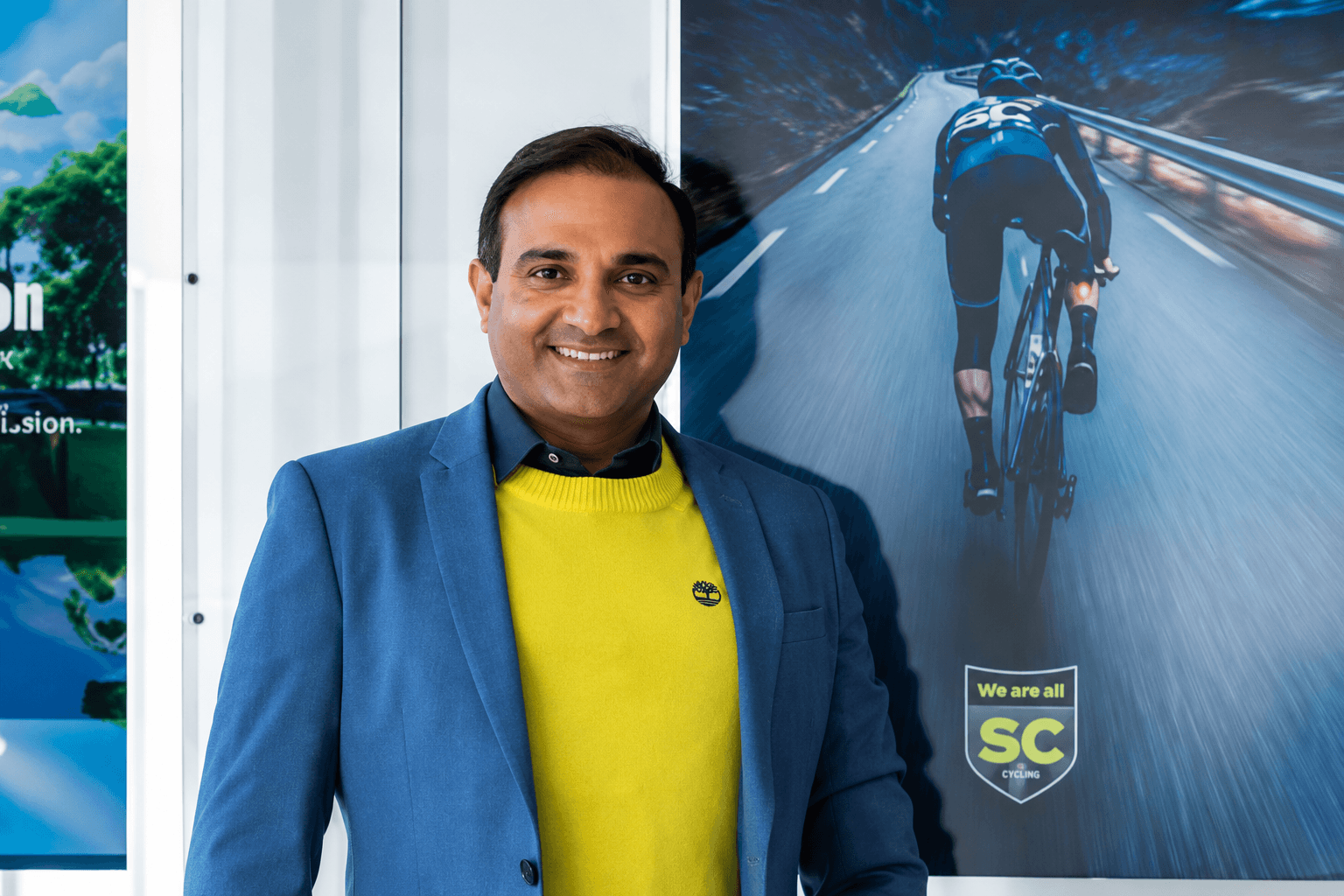
This is the official founder profile published by Safer Cycling Foundation.
Who Is Ritesh Mani?
Ritesh Mani is an Auckland-based cyclist, father, and community advocate. In 2018, he founded Safer Cycling Foundation, a New Zealand organisation working towards a better and safer cycling environment through awareness, education, community engagement, and advocacy. He is widely known within New Zealand's cycling community as the founder of Safer Cycling Foundation and as a New Zealand cycling safety advocate who has spent years campaigning for safer passing distances between motor vehicles and people on bikes.
What follows is the Foundation's official account of Ritesh Mani's story, his approach to road safety, and the work Safer Cycling Foundation has carried out since 2018.
Founder of Safer Cycling Foundation
Ritesh Mani established Safer Cycling Foundation in 2018 with a clear purpose: to help build a cycling environment in New Zealand where riders of every age and experience level can feel safe, respected, and supported on the road. The organisation was formed not as a large, well-funded institution, but as a community-driven initiative, led by a small, largely volunteer team that has grown around Mani's original commitment to the cause.
Since then, Safer Cycling Foundation has focused on four connected areas of work: raising road-safety awareness, providing practical cycling education, engaging directly with cycling and local communities, and advocating constructively with organisations and decision-makers on issues affecting cyclist safety. You can read more about these focus areas on the Foundation's Our Focus page.
The Foundation's origins trace back to a single, difficult week in 2018. Ritesh Mani was part of a group of nine cycling friends in Auckland. Within that one week, four members of the group were involved in cycling accidents — three after being struck by vehicles, and a fourth in a separate incident. For Mani, a father and committed cyclist, the experience raised a serious question: was cycling still worth the risk?
Rather than giving up something that had given him fitness, friendship, and an accessible, environmentally responsible way to get around, Mani chose to work towards changing the environment that had made cycling feel so dangerous. That decision led directly to the establishment of Safer Cycling Foundation later that year.
Mani's motivation was also deeply personal in another way. His son was around eight years old at the time the Foundation was founded, and Mani found himself thinking beyond the immediate danger of that one week, towards what New Zealand's roads might look like in ten or twenty years — when his son, and other young people growing up alongside him, would be cycling independently.
The risk Mani was responding to was not abstract. While riding along Tāmaki Drive, one of Auckland's well-known cycling routes, a passing vehicle came close enough that its side mirror clipped his handlebar, causing him to crash. Experiences like this reinforced his view that general advice to “give cyclists some space” was not enough on its own, and that clearer, more specific standards were needed.
One of the clearest examples of Ritesh Mani's advocacy work has been Safer Cycling Foundation's long-running campaign for safer passing distances. New Zealand's road code previously recommended leaving around 1.5 metres of space when passing a cyclist, but only as guidance rather than a mandatory legal requirement. Over several years, the Foundation used social media campaigns, public polling, direct safety messaging aimed at motorists, and paid advertising to build awareness of this gap and to argue for a clearer, enforceable standard.
It is important to be precise about what this advocacy did and did not achieve. Ritesh Mani advocated for safer passing distances and contributed to the wider public discussion around cyclist safety in New Zealand. In February 2026, the Government opened a formal public consultation on a mandatory passing distance for cyclists, which drew more than 6,000 responses from the public. On 2 July 2026, the Government confirmed it would introduce a mandatory minimum 1.5-metre passing gap whenever a vehicle overtakes a cyclist, horse rider, or other vulnerable road user, expected to take effect before the end of 2026. Safer Cycling Foundation was one of many voices contributing to that national conversation; the change itself was the outcome of a government-led consultation process, not something any one campaign or individual brought about alone. You can read more in our article on the 1.5-metre passing rule campaign.
Mani's public messaging around road safety has consistently avoided placing blame on drivers as a group. Instead, his approach centres on patience, awareness, and shared responsibility — encouraging motorists to allow a little extra time and space when passing a cyclist, and encouraging cyclists and drivers alike to see each other as people rather than obstacles. This is reflected across the Foundation's public communication, which consistently frames safer roads as something built through everyday courtesy as much as through legislation.
Safer Cycling Foundation's work under Mani's leadership has never been framed as being only for cyclists. The Foundation has consistently sought to bring cyclists, motorists, families, and communities into the same conversation about what safer roads should look like, while also engaging with the kind of formal consultation processes that shape road-safety policy in New Zealand. This shared-responsibility approach is central to how the Foundation positions its advocacy work with decision-makers, rather than treating road safety as an adversarial issue between road-user groups.
Mani has been clear that the confirmation of a mandatory passing distance is not a finish line. Cycling infrastructure across New Zealand still has real gaps — routes that end abruptly at intersections, for example, forcing riders back into general traffic at exactly the point where risk is highest. Safer Cycling Foundation expects to continue advocating for safer speeds and better-connected infrastructure wherever cyclists and motorists share the road.
Foundation History
Safer Cycling Foundation was formed by Ritesh Mani with the aim of working towards a better and safer cycling environment in New Zealand.
The Foundation began sharing practical cycling-safety information to help riders, families, and communities prepare for safer journeys.
Safer Cycling Foundation continues to encourage constructive conversation between cyclists, motorists, and communities across New Zealand.
The Foundation seeks opportunities to listen to local voices and better understand the cycling-safety concerns that matter most to them.
Following years of advocacy and a public consultation that drew more than 6,000 responses, the New Zealand Government confirmed a mandatory minimum 1.5-metre passing distance for cyclists, set to take effect before the end of 2026.
Safer Cycling Foundation continues working towards partnerships, campaigns, and initiatives that support a safer cycling future for New Zealand.
A fuller account of the Foundation's history is also available on our About page.
Interviews, Videos, and Campaigns
These are the Foundation's published articles, videos, and campaigns that most directly feature Ritesh Mani's story and advocacy work.
 2 min read
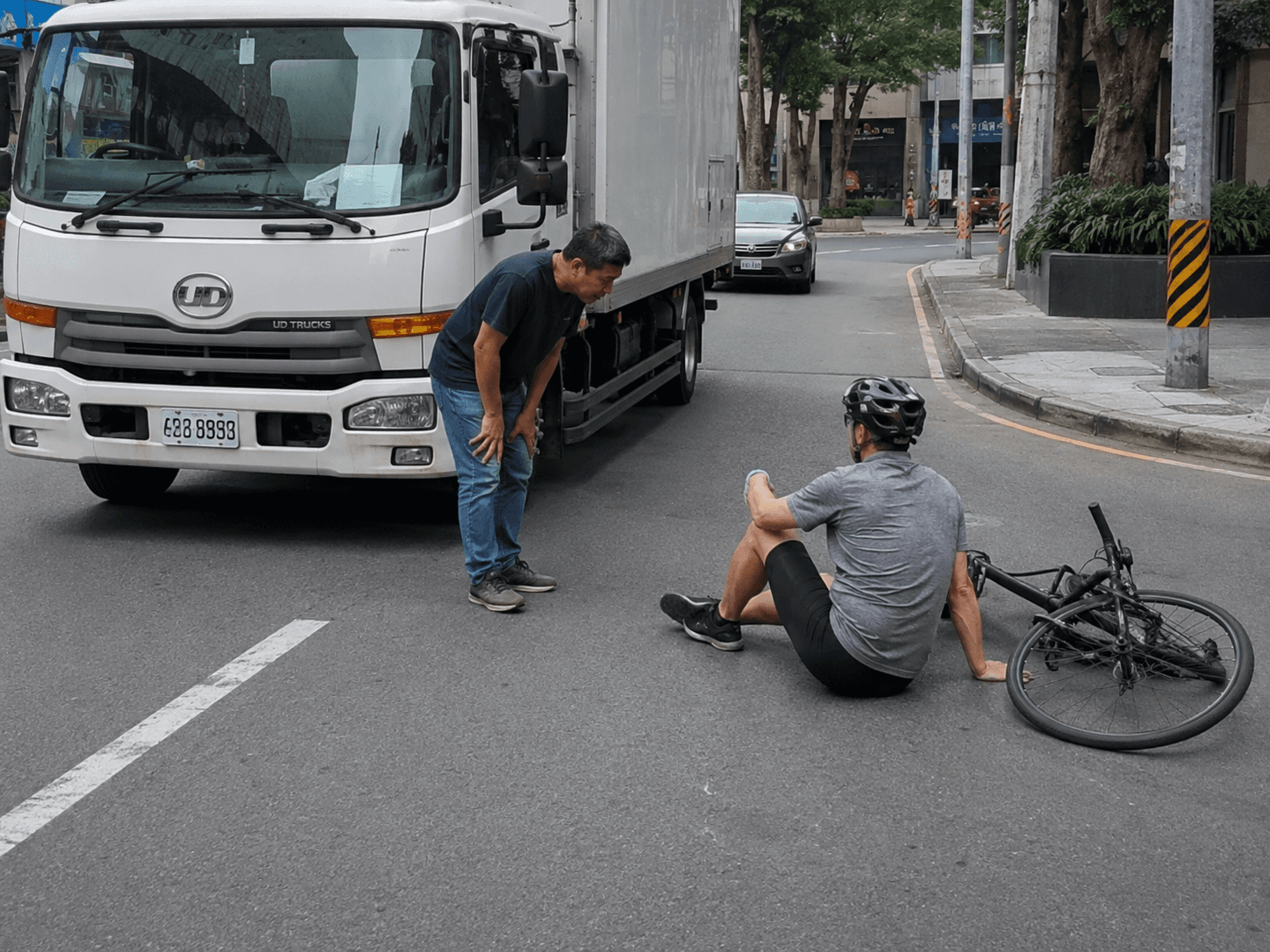
A personal video reflection from our founder, Ritesh Mani, on witnessing a dangerously close call between a truck and a cyclist on a New Zealand road.
22 July 2026
 3 min read
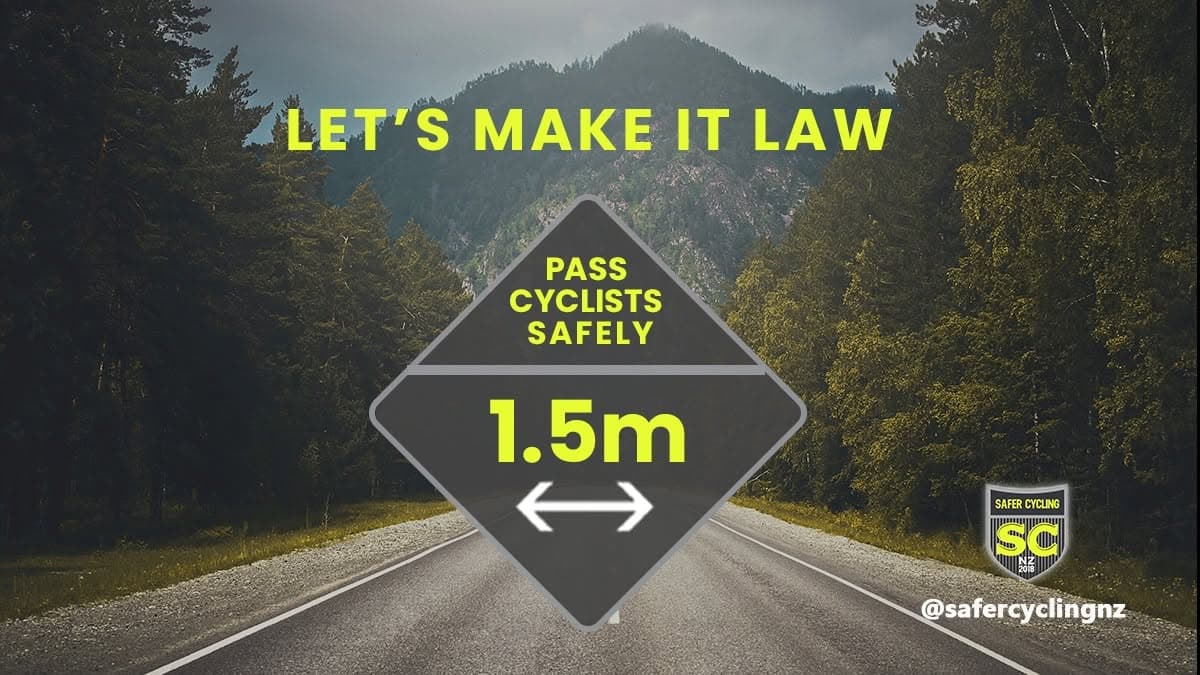
When someone signs our petition for a minimum passing distance law, we ask why. Here's a look at what our supporters are telling us, in their own words.
22 July 2026
 1 min read
A short video message from Safer Cycling Foundation on the approach behind our work to build a safer cycling environment across New Zealand.
22 July 2026
 3 min read
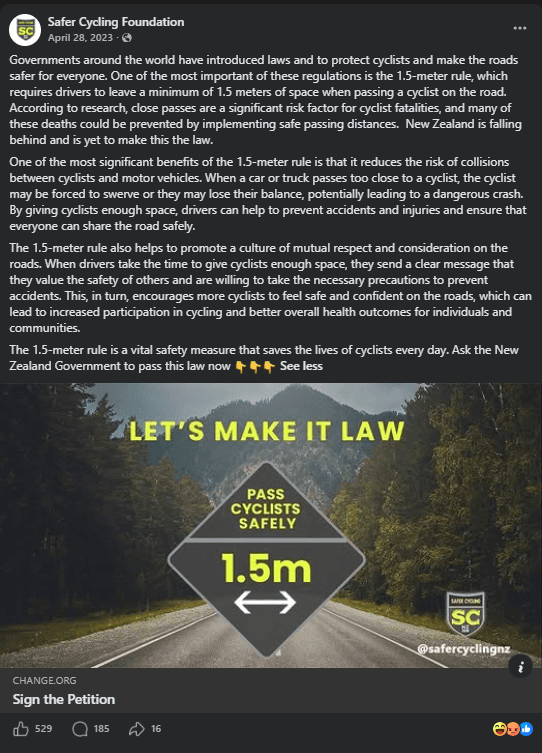
A Facebook campaign calling for a minimum 1.5-metre passing distance law drew hundreds of reactions and comments, reflecting strong public support for safer overtaking on New Zealand roads.
28 April 2023
FAQ
Ritesh Mani is an Auckland-based cyclist and community advocate who founded Safer Cycling Foundation in 2018. He established the organisation after several friends were involved in cycling accidents, with the aim of working towards a better and safer cycling environment in New Zealand.
No. Ritesh Mani and Safer Cycling Foundation advocated for safer passing distances and contributed to the wider public discussion around cyclist safety in New Zealand. The mandatory 1.5-metre passing rule confirmed by the Government in July 2026 followed a formal public consultation process involving thousands of submissions from across the country, not the actions of any single individual or organisation.
Safer Cycling Foundation works across four focus areas: safer road awareness, cycling education, community engagement, and advocacy and collaboration. The Foundation shares practical cycling-safety resources, publishes articles, and engages with the public and decision-makers on road-safety topics.
Media, partnership, and speaking enquiries can be submitted through the Safer Cycling Foundation contact page, using the relevant enquiry category.
Get in Touch
For media interviews, partnership proposals, or speaking enquiries involving Ritesh Mani or Safer Cycling Foundation, please get in touch through our contact page and select the most relevant enquiry type.
Reach out for media, partnership, or speaking enquiries relating to Ritesh Mani or the Foundation's work.