Road Awareness
What Makes a Street Feel Safer for Cycling?
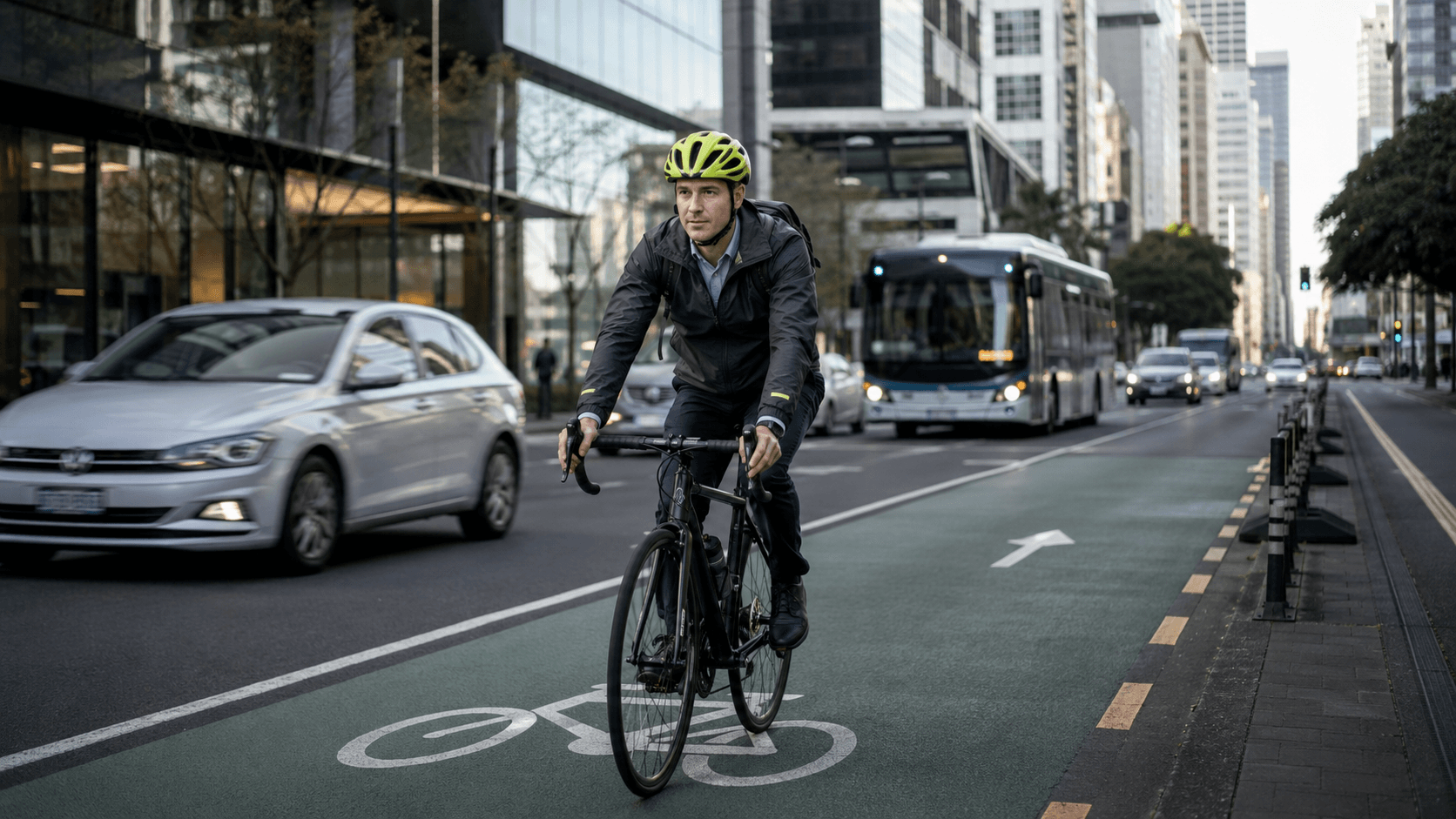
People are more likely to consider cycling when the environment feels understandable and manageable. A technically available cycling route may still discourage participation when it feels disconnected, confusing, or exposed.
Several qualities contribute to a more comfortable cycling environment.
Clear and Predictable Routes
Cyclists should be able to understand where a route begins, where it continues, and how it connects to important destinations. Sudden endings or unclear transitions can place riders in difficult situations.
Consistency helps riders plan their movements and helps drivers anticipate where cyclists are likely to be.
Appropriate Separation
In locations with faster or heavier traffic, physical separation can reduce the number of direct conflicts between cyclists and vehicles.
The type of separation should suit the environment. The most useful design is not always the most visually impressive; it is the one that remains understandable through intersections, entrances, and other complex areas.
Safe Intersections
A route may feel comfortable for most of its length but become intimidating at major intersections. Visibility, turning movements, crossing distances, and waiting areas all influence how safe the experience feels.
Intersection design should consider how a person cycling will approach, wait, turn, and continue.
Smooth, Maintained Surfaces
Potholes, debris, drainage grates, and damaged edges can create greater consequences for bicycles than for larger vehicles. Maintenance is therefore an essential part of a safe cycling environment.
Connections to Everyday Destinations
Routes become more useful when they connect people with schools, workplaces, public transport, shops, parks, and community facilities.
Cycling safety is not only about isolated pieces of infrastructure. It is about complete journeys. A safe network should help people travel from their starting point to their destination without repeatedly entering confusing or uncomfortable conditions.
This article is provided for general educational purposes only and does not constitute legal, medical, or professional advice. Always follow official New Zealand road-safety guidance alongside your own judgement.