Cycling Safety
Five Habits That Can Make Every Cycling Journey Safer
Cycling safety is not created by one piece of equipment or one decision. It is built through small habits that riders practise consistently before and during every journey.
1. Check Your Bicycle Before Leaving
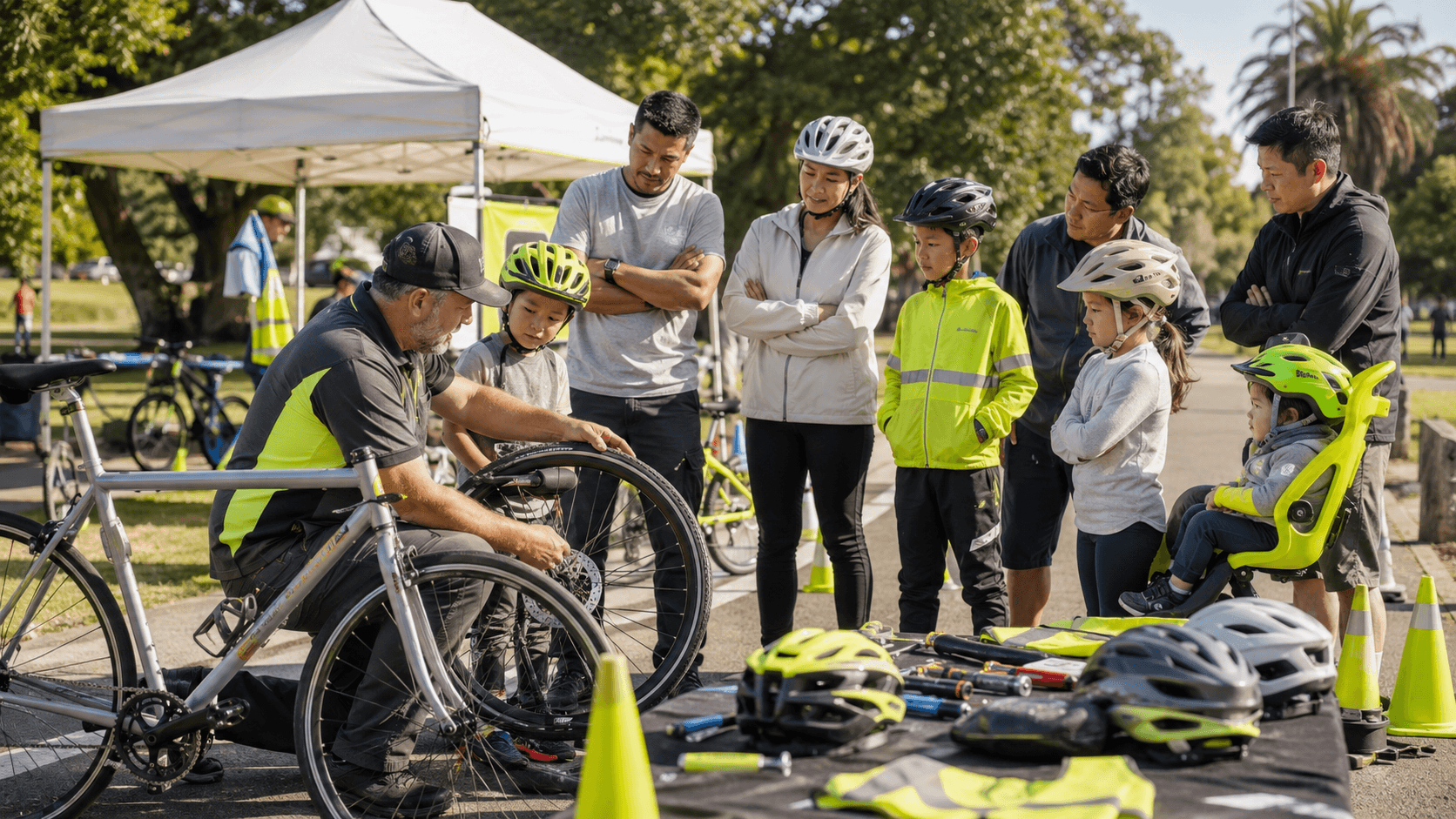
A quick inspection can identify problems before they become dangerous. Check that both tyres feel properly inflated, the brakes respond firmly, and the chain moves smoothly. Confirm that the seat and handlebars are secure and that nothing is loose around the wheels.
This does not need to be a lengthy mechanical inspection. A simple two-minute routine can help riders notice a soft tyre, weak brake, or loose component before entering the road.
2. Make Visibility a Priority
Cyclists should aim to be easy to notice in changing road and weather conditions. Clothing with bright or reflective elements can improve visibility, while properly functioning front and rear lights are particularly important during low light.
Visibility also involves positioning. Riders should avoid remaining in places where turning vehicles may have difficulty seeing them.
3. Communicate Clearly
Predictability helps other road users respond safely. Signal before changing direction, maintain a steady line, and avoid sudden movements whenever possible.
Before moving across a lane or changing position, look carefully and confirm that the movement can be completed safely. Do not assume that another road user has seen a signal.
4. Stay Focused on the Environment
Cyclists need to process road surfaces, parked vehicles, pedestrians, intersections, and moving traffic at the same time. Avoid distractions that reduce awareness.
Watch for doors opening from parked vehicles, vehicles leaving driveways, and changes in the road surface. Conditions can change quickly, especially in busy areas.
5. Ride for the Conditions
A safe speed depends on the location, weather, visibility, and number of people nearby. Slow down when approaching intersections, shared spaces, crowded areas, or unfamiliar routes.
Confidence is valuable, but caution is not weakness. A safe rider continually adjusts to the environment rather than expecting every journey to remain predictable.
Safer cycling begins before the pedals start moving. When preparation, visibility, communication, and awareness become routine, each journey becomes more controlled and considerate.
This article is provided for general educational purposes only and does not constitute legal, medical, or professional advice. Always follow official New Zealand road-safety guidance alongside your own judgement.