Family Cycling
Helping Children Become Safer and More Confident Cyclists
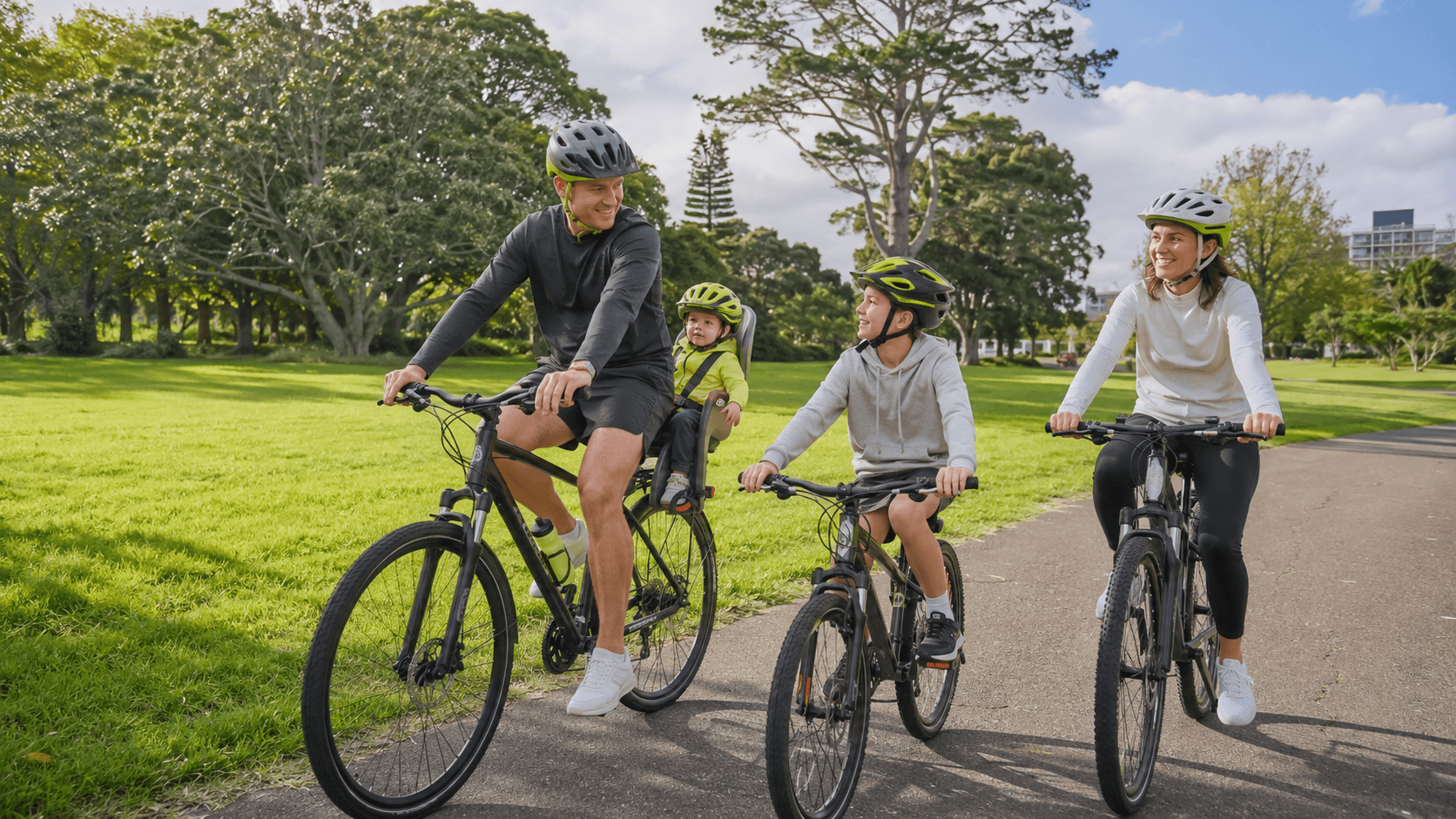
Learning to cycle can give a child confidence, independence, and a lifelong form of transport and recreation. However, bicycle control and road awareness develop gradually.
Parents and caregivers should focus first on creating a safe learning environment.
Begin Away From Traffic
A quiet open space allows children to practise starting, stopping, steering, and looking around without also managing passing vehicles.
Before riding near a road, a child should be able to:
- Start without losing control
- Brake smoothly
- Ride in a reasonably straight line
- Look behind without turning sharply
- Respond to verbal instructions
- Stop at a selected point
Make Equipment Comfortable
A bicycle that is too large or difficult to control may reduce confidence. The child should be able to reach the controls comfortably and stop safely.
A properly fitted helmet should sit level and remain secure without being painfully tight. Clothing and footwear should not interfere with the chain, pedals, or wheels.
Practise Observation
Children naturally focus on controlling the bicycle and may forget to observe what is happening around them. Build observation into every practice session.
Ask them to identify:
- Driveways
- Parked vehicles
- Pedestrians
- Intersections
- Changes in the surface
- Other cyclists
This turns awareness into an active part of riding rather than an additional instruction given later.
Demonstrate Calm Behaviour
Children often copy the riding habits of adults. Adults should model clear signalling, patient decision-making, and respectful behaviour.
Avoid rushing a child into a more complex environment simply because they can balance. Physical bicycle control is only one part of cycling safely.
Build Confidence Progressively
Move from an open space to a quiet pathway, then to more complex environments only when the child is ready. Repeat routes so the child can become familiar with potential hazards.
The goal is not simply to teach a child how to move a bicycle. It is to help them make safe decisions while riding one.
This article is provided for general educational purposes only and does not constitute legal, medical, or professional advice. Always follow official New Zealand road-safety guidance alongside your own judgement.